Личността и обществото
76 въпроса с отговори, 10 ключови понятия и 6 задачи за мислене и 19 игри за проектора.

- 1 Тема: Личността и обществото
- 2 Изберете игра
- 3 Пуснете на проектора
Личността и обществото
Табло и Вярно или невярно са безплатни с профил. Всички игри и „На живо“: 30 дни безплатно за учители. Цени
На живо с телефониУчениците влизат с код и отговарят от телефона си. Класация в реално време.Без проектор и без телефони
Отбелязвате от своя компютър, а всеки отговор отива в профила на ученика.Отборни битки
Класът е разделен на отбори, които се състезават за точки.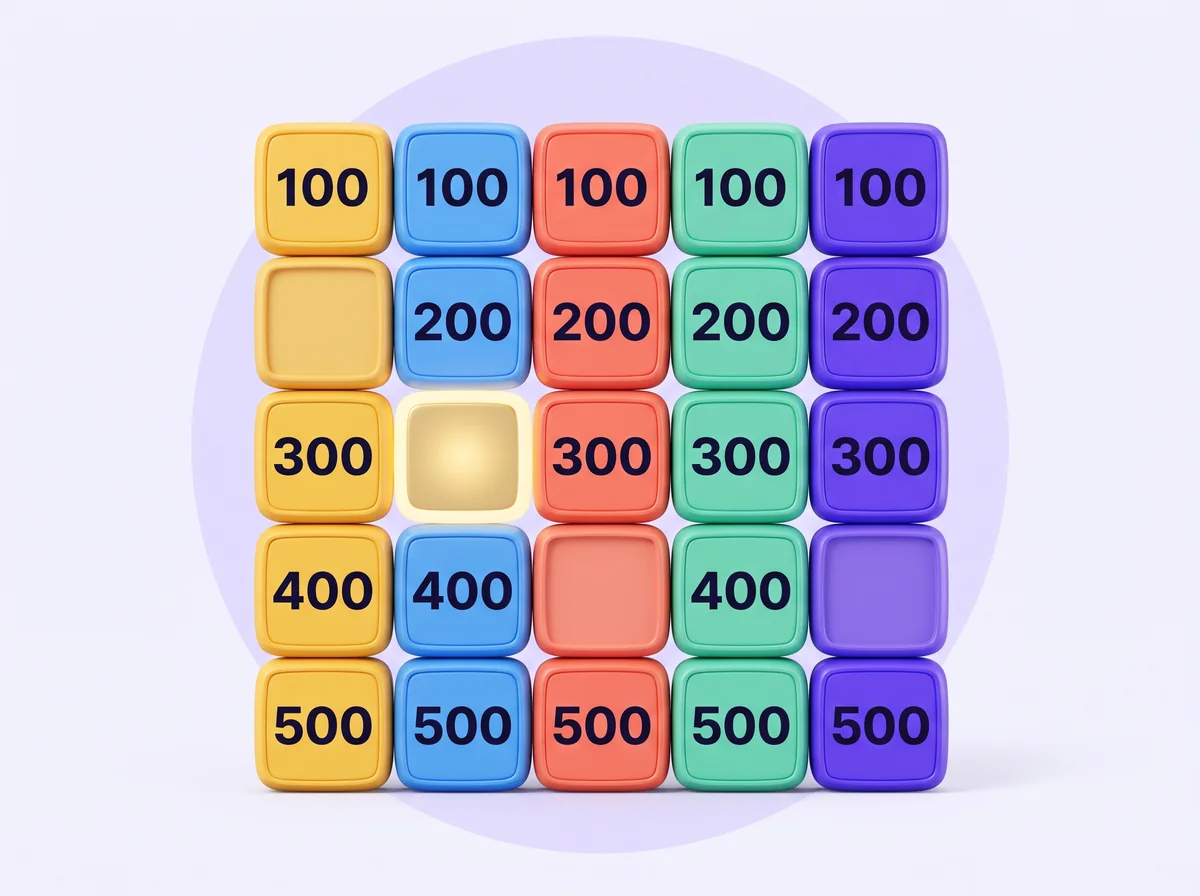 Табло5 теми по 5 въпроса, от 100 до 500 точки. Отборите избират поле, едно поле крие двойна стойност.Безплатно
 Отборен тест А/Б/В/ГВъпрос с четири отговора и таймер. Всеки отбор вдига карта с буква.Пусни на проектора
 НадбягванеВсеки отбор има писта. Верният отговор движи колата напред, трудният въпрос дава турбо.Пусни на проектора
 Теглене на въжеДва отбора един срещу друг. Всеки верен отговор дърпа въжето към твоя отбор.Пусни на проектора
 Морски шахХ срещу О на поле 3 на 3. За да заемеш квадрат, трябва да отговориш на въпроса в него.Пусни на проектора
 БомбаБомбата с неизвестен фитил минава от отбор на отбор при верен отговор. Не я задържай!Пусни на проектора
 КолелотоЗавъртете колелото: то избира темата и наградата. Понякога носи бонус, понякога взима хода.Пусни на проектора
Целият клас
Всички играят заедно или един по един пред класа. Ескейп стаяПет заключени врати и часовник. Всяка решена врата дава цифра от кода за изход.Пусни на проектора
 Милионер15 въпроса с нарастваща трудност, три жокера и сигурни суми.Пусни на проектора
 Горещ столЕдин ученик, 60 секунди и колкото може повече верни отговори. Класът следи класацията.Пусни на проектора
 БингоРазпечатайте картите. Учителят чете въпросите, учениците зачеркват отговорите.Пусни на проектора
 Вярно или невярноБързи твърдения. Класът гласува с палец нагоре или надолу.Безплатно
Думи и понятия
Ключовите понятия от темата: познай, свържи, запомни. КръстословицаКръстословица от 10 ключови понятия. Решавате на екрана или я разпечатвате.Пусни на проектора
 БесеницаПознайте понятието буква по буква, преди да свършат опитите.Пусни на проектора
 Тайният обектТри подсказки от трудна към лесна. Колкото по-рано познаеш, толкова повече точки.Пусни на проектора
 МемориОбърнати карти с въпроси и отговори. Намерете двойките и запомнете къде са.Пусни на проектора
 Свържи двойкитеШест въпроса и шест отговора, разбъркани. Отборите ги свързват на ред.Пусни на проектора
Мислене
Подреждане и откриване на грешки: разбиране, не наизуст.
Уроци в темата
Кратко обяснение, най-важното за запомняне и въпроси за всеки урок от учебната програма.
Въпроси и отговори: Личността и обществото
Всички въпроси от комплекта по английски език за 11 клас. Натиснете въпроса, за да видите верния отговор и обяснението. Удобно за преговор преди контролно и за подготовка у дома.
Ценности и нагласи
Someone who always tells the truth is ___.
- jealous
- honest
- selfish
- arrogant
Отговор: honest
Honest означава честен, човек, който не лъже.
The opposite of 'selfish' is ___.
- greedy
- mean
- vain
- generous
Отговор: generous
Generous (щедър) е противоположно на selfish (егоистичен).
Someone you can always trust and depend on is ___.
- reliable
- lazy
- rude
- mean
Отговор: reliable
Reliable означава надежден.
If you feel sorry for people who suffer and want to help them, you show ___.
- ambition
- greed
- envy
- compassion
Отговор: compassion
Compassion означава състрадание, загриженост за страданието на другите.
If you can understand and share another person's feelings, you have ___.
- empathy
- apathy
- pride
- greed
Отговор: empathy
Empathy е съпричастност, умение да се поставиш на мястото на другия.
Someone who thinks they are better than other people is ___.
- modest
- shy
- arrogant
- humble
Отговор: arrogant
Arrogant означава надменен. Modest и humble са противоположни.
A person who is ready to accept new ideas and different opinions is ___.
- open-minded
- narrow-minded
- stubborn
- bad-tempered
Отговор: open-minded
Open-minded означава човек с широки възгледи, отворен към нови идеи.
He is so ___ that he believes everything people tell him.
- sceptical
- cautious
- gullible
- cynical
Отговор: gullible
Gullible означава лековерен, който вярва на всичко.
Someone who keeps trying and does not give up easily is ___.
- careless
- hesitant
- determined
- indifferent
Отговор: determined
Determined означава решителен, упорит в целите си.
She always does what she believes is morally right, even when it is hard. She is ___.
- gullible
- impulsive
- principled
- indifferent
Отговор: principled
Principled означава принципен, човек със здрави морални принципи.
Complete: 'She has a very positive attitude ___ life.'
- for
- on
- at
- to
Отговор: to
Казваме attitude to (или towards) something.
Which idiom means 'to say exactly what you think'?
- to speak your mind
- to lose your mind
- to change your mind
- to make up your mind
Отговор: to speak your mind
Speak your mind значи да кажеш открито мнението си. Make up your mind значи да решиш.
Which word means 'an unfair opinion about a group of people, formed without real knowledge'?
- tolerance
- empathy
- integrity
- prejudice
Отговор: prejudice
Prejudice е предразсъдък: мнение, създадено предварително, без познаване на хората.
Which prefix forms the opposite of 'responsible'?
- un-
- ir-
- in-
- dis-
Отговор: ir-
Пред думи, започващи с r, отрицанието често е ir-: irresponsible.
Which suffix forms a noun from the adjective 'kind'?
- -ment
- -ity
- -ion
- -ness
Отговор: -ness
Kind + -ness = kindness (доброта).
Времена: обобщение
She ___ to work by bus every day.
- is going
- goes
- has gone
- go
Отговор: goes
За навици и повтарящи се действия (every day) се използва Present Simple, 3 л. ед. ч.: goes.
Yesterday we ___ a great film.
- watch
- have watched
- watched
- are watching
Отговор: watched
С 'yesterday' (завършено минало време) се използва Past Simple.
We ___ to the cinema on Saturday. We've already got the tickets.
- went
- are going
- have gone
- were going
Отговор: are going
За уговорени бъдещи планове използваме present continuous.
Look! It ___ outside.
- snows
- has snowed
- is snowing
- snowed
Отговор: is snowing
'Look!' показва действие в момента на говоренето, затова Present Continuous.
Which verb is NOT normally used in the continuous form?
- know
- run
- write
- cook
Отговор: know
Know е глагол за състояние (stative verb) и обикновено не се използва в Continuous.
I ___ my keys! I can't open the door.
- lose
- am losing
- had lost
- have lost
Отговор: have lost
Present perfect: минало действие с резултат сега.
I ___ in this town since 2018.
- have lived
- live
- am living
- lived
Отговор: have lived
С 'since' и действие, което продължава и сега, се използва Present Perfect.
I ___ dinner when the phone rang.
- am having
- have had
- was having
- will have
Отговор: was having
По-дълго минало действие, прекъснато от кратко, е в Past Continuous.
This time tomorrow I ___ on a beach in Greece.
- will lie
- will be lying
- lie
- am lain
Отговор: will be lying
Future continuous описва действие в процес в определен момент в бъдещето.
When I arrived at the station, the train ___.
- has already left
- is already leaving
- had already left
- have already left
Отговор: had already left
Влакът е тръгнал преди друго минало действие (arrived), затова Past Perfect.
Hurry up! The film ___ in ten minutes, according to the cinema schedule.
- starts
- started
- has started
- had started
Отговор: starts
За бъдещи събития по разписание използваме Present Simple.
She ___ for two hours when the bus finally came.
- has been waiting
- was waited
- had been waiting
- waits
Отговор: had been waiting
Past perfect continuous: продължително действие преди друго минало действие.
By next June, we ___ at this school for four years.
- will have studied
- will study
- are studying
- have studied
Отговор: will have studied
'By next June' означава 'до определен момент в бъдещето', затова Future Perfect.
She is tired because she ___ all morning.
- cleaned
- has been cleaning
- had cleaned
- cleans
Отговор: has been cleaning
Present Perfect Continuous обяснява резултат сега от продължително действие допреди малко.
When I was a child, I ___ climb trees every summer.
- would
- will
- am used to
- have
Отговор: would
Would + глагол описва повтарящи се действия в миналото, подобно на used to.
Поколения и стереотипи
The difference in ideas and values between young and old people is called the generation ___.
- line
- gap
- wall
- step
Отговор: gap
Generation gap означава разлика между поколенията.
Your grandparents belong to an older ___.
- gender
- genre
- generator
- generation
Отговор: generation
Generation означава поколение.
Your mother's mother is your ___.
- aunt
- grandmother
- niece
- cousin
Отговор: grandmother
Майката на майка ти е баба ти.
People born after World War II, roughly between 1946 and 1964, are often called ___.
- Generation Z
- Millennials
- Generation Alpha
- Baby Boomers
Отговор: Baby Boomers
След войната раждаемостта рязко нараства (baby boom), оттук и името Baby Boomers.
Someone who is 'old-fashioned' ___.
- loves the latest gadgets
- prefers traditional ideas and ways
- is very young
- is always late
Отговор: prefers traditional ideas and ways
Old-fashioned означава старомоден, привързан към традициите.
People born roughly between 1997 and 2012 are called Generation ___.
- X
- Y
- A
- Z
Отговор: Z
Поколение Z са родените приблизително между 1997 и 2012 г.
A ___ is a fixed, oversimplified idea about a type of person.
- headline
- stereotype
- recipe
- pattern
Отговор: stereotype
Stereotype е стереотип: опростена и често невярна представа за група хора.
Complete: 'Older people sometimes ___ young people for being lazy.'
- complain
- accuse
- argue
- criticise
Отговор: criticise
Criticise someone for something е правилната конструкция. Complain about, accuse of, argue with.
Complete: 'My grandparents and I don't always see ___.' (agree)
- eye to eye
- face to face
- hand in hand
- back to back
Отговор: eye to eye
See eye to eye означава да сте на едно мнение.
Which idiom means 'to judge someone only by how they look'?
- to break the ice
- to hit the nail on the head
- to call it a day
- to judge a book by its cover
Отговор: to judge a book by its cover
To judge a book by its cover означава да съдиш по външния вид.
Unfair treatment of people because of their age is called ___.
- ageism
- racism
- sexism
- heroism
Отговор: ageism
Ageism е дискриминация въз основа на възрастта.
Which idiom describes an older person who does not want to change their habits?
- over the moon
- on the ball
- set in their ways
- under the weather
Отговор: set in their ways
Set in one's ways значи закоравял в навиците си.
'Teenagers today are glued to their phones.' Here 'glued to' means ___.
- always using and unable to stop
- fixing with glue
- angry with
- afraid of
Отговор: always using and unable to stop
Be glued to something (идиом) означава да не можеш да се откъснеш от нещо.
'Not all teenagers are irresponsible.' What does this sentence do?
- It says every teenager is irresponsible
- It says no teenager is irresponsible
- It challenges a generalisation
- It gives a statistic
Отговор: It challenges a generalisation
Not all оспорва обобщението, че всички тийнейджъри са безотговорни.
'Peer pressure' is ___.
- pressure from parents to study
- stress before exams
- influence from people your own age to behave like them
- advice from older generations
Отговор: influence from people your own age to behave like them
Peers са връстници, а peer pressure е натискът от тях.
Права и отговорности
Every child has the ___ to education.
- duty
- rule
- right
- fine
Отговор: right
Right означава право. Образованието е право на всяко дете.
A person who legally belongs to a country and has rights there is a ___.
- tourist
- visitor
- stranger
- citizen
Отговор: citizen
Citizen означава гражданин.
Rules made by the state that everyone must obey are ___.
- laws
- games
- hobbies
- habits
Отговор: laws
Laws са законите.
Paying taxes and obeying the law are a citizen's ___.
- rights
- hobbies
- privileges
- responsibilities
Отговор: responsibilities
Responsibilities са задължения, отговорности на гражданина.
Complete: 'Everyone has the right ___ a fair trial.'
- of
- to
- for
- on
Отговор: to
Казваме the right to something: the right to vote, the right to a fair trial.
A person who breaks the law can be ___ by the police.
- elected
- rewarded
- employed
- arrested
Отговор: arrested
Arrested означава арестуван.
In Bulgaria, citizens can vote in national elections from the age of ___.
- 16
- 18
- 21
- 14
Отговор: 18
В България правото на глас се придобива на 18 години.
Doing unpaid work to help your community is called ___ work.
- compulsory
- manual
- voluntary
- part-time
Отговор: voluntary
Voluntary work е доброволен, неплатен труд.
Choosing representatives by voting is called an ___.
- invitation
- election
- exhibition
- explanation
Отговор: election
Election означава избори.
The Universal Declaration of Human Rights was adopted by the United Nations in ___.
- 1918
- 1965
- 1948
- 1989
Отговор: 1948
Всеобщата декларация за правата на човека е приета от ООН на 10 декември 1948 г.
Which word means 'the state of everyone having the same rights and opportunities'?
- equality
- inequality
- bias
- privilege
Отговор: equality
Equality означава равенство.
Which institution makes the laws in Bulgaria?
- the Constitutional Court
- the President
- the Council of Ministers
- the National Assembly
Отговор: the National Assembly
Законите в България се приемат от Народното събрание.
'Freedom of expression' means the right to ___.
- say and publish your opinions
- travel abroad
- own property
- a fair trial
Отговор: say and publish your opinions
Свобода на изразяване: правото свободно да казваш и публикуваш мнението си.
The UN Convention on the Rights of the Child protects people under the age of ___.
- 14
- 16
- 18
- 21
Отговор: 18
Според Конвенцията дете е всеки човек под 18-годишна възраст.
Complete: 'Parents are responsible ___ their children's safety.'
- of
- for
- to
- with
Отговор: for
Казваме responsible for something.
Есе за мнение
In an opinion essay, you first state your opinion in the ___.
- footnotes
- title only
- introduction
- bibliography
Отговор: introduction
Мнението (тезата) се заявява още в увода.
Which part of an essay sums up the main points?
- the conclusion
- the introduction
- the title
- the first argument
Отговор: the conclusion
Заключението обобщава основните идеи и мнението.
In a well-written essay, each main paragraph usually develops ___.
- all the ideas
- no ideas
- one main idea
- only examples
Отговор: one main idea
Всеки основен абзац развива една главна идея.
Which phrase is used to give your opinion?
- In my view,
- For example,
- As a result,
- Finally,
Отговор: In my view,
In my view означава 'според мен'.
Which phrase introduces an example?
- In conclusion,
- For instance,
- Nevertheless,
- To begin with,
Отговор: For instance,
For instance означава 'например'.
Which linker adds another point?
- Furthermore,
- However,
- In contrast,
- Nevertheless,
Отговор: Furthermore,
Furthermore добавя още един аргумент. Останалите изразяват контраст.
Which linking word introduces a contrast?
- Moreover,
- However,
- Furthermore,
- In addition,
Отговор: However,
However изразява противопоставяне, а останалите добавят сходна идея.
Choose the best linker: '___ some people disagree, I believe school uniforms are useful.'
- Despite
- However
- Because of
- Although
Отговор: Although
Although се следва от подчинено изречение, а despite и because of от съществително.
The sentence that states the main idea of a paragraph is the ___ sentence.
- final
- topic
- short
- question
Отговор: topic
Topic sentence въвежда главната мисъл на абзаца.
Which phrase best introduces the conclusion?
- First of all,
- For instance,
- On the one hand,
- To sum up,
Отговор: To sum up,
To sum up означава 'обобщено' и започва заключението.
Presenting the opposite opinion and then answering it is called giving a ___.
- summary
- counter-argument
- quotation
- headline
Отговор: counter-argument
Counter-argument е контрааргумент, който авторът опровергава.
What should you avoid in a formal essay?
- linking words
- examples
- a clear conclusion
- contractions like 'don't' and 'can't'
Отговор: contractions like 'don't' and 'can't'
В официален стил пишем пълни форми: do not, cannot.
Which sentence has the most suitable style for a formal opinion essay?
- Social media is totally awesome, right?
- It could be argued that social media has changed communication.
- I mean, phones are like everywhere.
- Gonna say social media is bad.
Отговор: It could be argued that social media has changed communication.
Официалното есе използва неутрален, безличен стил без жаргон.
Which is the best thesis statement for the essay 'Should voting be compulsory?'
- Voting is something people do.
- There are elections in many countries.
- Some people like voting and some don't, I guess.
- In my opinion, voting should not be compulsory because it limits personal freedom.
Отговор: In my opinion, voting should not be compulsory because it limits personal freedom.
Добрата теза заявява ясно позиция и причина.
Choose the best linker: 'Fast food is cheap; ___, many young people eat it every day.'
- consequently
- nevertheless
- whereas
- in contrast
Отговор: consequently
Consequently въвежда следствие (затова).
Финален въпрос
Complete with the correct forms: 'By the time we ___ (arrive), the concert ___ (start).'
Отговор: arrived; had started
Пристигането е в Past Simple, а започването на концерта е станало преди него, затова Past Perfect.
Ключови понятия по темата
- Honest
- Който казва истината и не лъже
- Empathy
- Способност да разбираш и споделяш чувствата на другите
- Tolerance
- Приемане на мнения, вярвания и хора, различни от теб
- Stereotype
- Опростена, често невярна представа за група хора
- Generation
- Хора, родени приблизително по едно и също време
- Citizen
- Член на държава с права и задължения
- Rights
- Свободи, които всеки човек има по закон
- Duty
- Нещо, което трябва да направиш, задължение
- Prejudice
- Несправедливо мнение за някого, без да го познаваш
- Essay
- Кратко писмено съчинение по определена тема
Често задавани въпроси
Как да проведа час по темата „Личността и обществото“ с игра?
Изберете игра от комплекта и я пуснете на проектора или интерактивната дъска. Табло е добро за преговор на целия раздел, Ескейп стая е подходяща преди контролно, а Вярно или невярно е бърза загрявка в началото на часа. Не е нужно нищо за инсталиране.
По учебната програма ли са въпросите за 11 клас?
Да. Въпросите следват учебната програма на МОН по английски език за 11 клас (втори гимназиален етап) и покриват: Ценности и нагласи, Времена: обобщение, Поколения и стереотипи, Права и отговорности, Есе за мнение.
Могат ли учениците да отговарят от телефоните си?
Да. С режим „На живо“ всеки ученик влиза с код от телефона си, отговаря на въпросите и вижда класацията в реално време.
Може ли детето да упражнява темата у дома?
Да. В раздел „У дома“ детето играе със същите въпроси, събира звезди и повтаря грешките си, а родителят вижда напредъка.