Подготовка за изпит (Exam preparation)
76 въпроса с отговори, 10 ключови понятия и 6 задачи за мислене и 19 игри за проектора.

- 1 Тема: Подготовка за изпит (Exam preparation)
- 2 Изберете игра
- 3 Пуснете на проектора
Подготовка за изпит (Exam preparation)
Табло и Вярно или невярно са безплатни с профил. Всички игри и „На живо“: 30 дни безплатно за учители. Цени
На живо с телефониУчениците влизат с код и отговарят от телефона си. Класация в реално време.Без проектор и без телефони
Отбелязвате от своя компютър, а всеки отговор отива в профила на ученика.Отборни битки
Класът е разделен на отбори, които се състезават за точки.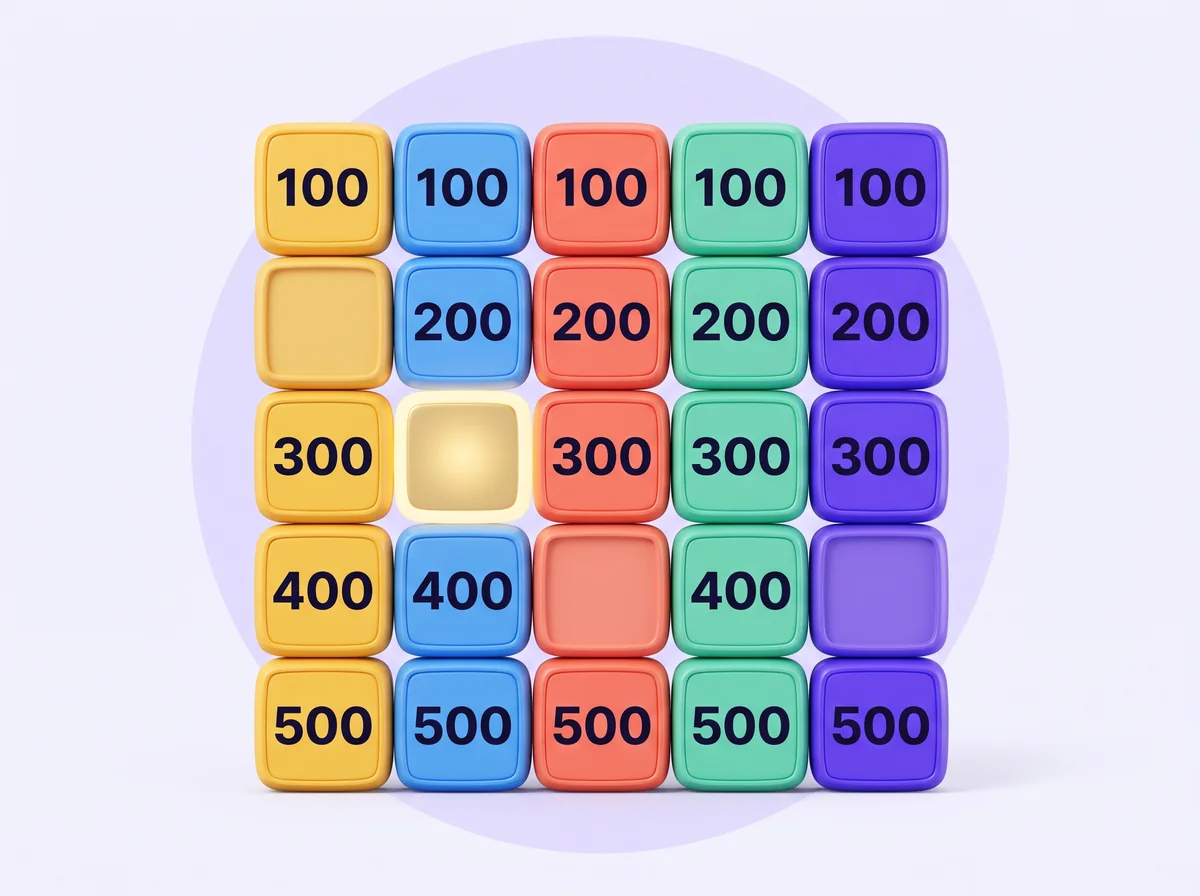 Табло5 теми по 5 въпроса, от 100 до 500 точки. Отборите избират поле, едно поле крие двойна стойност.Безплатно
 Отборен тест А/Б/В/ГВъпрос с четири отговора и таймер. Всеки отбор вдига карта с буква.Пусни на проектора
 НадбягванеВсеки отбор има писта. Верният отговор движи колата напред, трудният въпрос дава турбо.Пусни на проектора
 Теглене на въжеДва отбора един срещу друг. Всеки верен отговор дърпа въжето към твоя отбор.Пусни на проектора
 Морски шахХ срещу О на поле 3 на 3. За да заемеш квадрат, трябва да отговориш на въпроса в него.Пусни на проектора
 БомбаБомбата с неизвестен фитил минава от отбор на отбор при верен отговор. Не я задържай!Пусни на проектора
 КолелотоЗавъртете колелото: то избира темата и наградата. Понякога носи бонус, понякога взима хода.Пусни на проектора
Целият клас
Всички играят заедно или един по един пред класа. Ескейп стаяПет заключени врати и часовник. Всяка решена врата дава цифра от кода за изход.Пусни на проектора
 Милионер15 въпроса с нарастваща трудност, три жокера и сигурни суми.Пусни на проектора
 Горещ столЕдин ученик, 60 секунди и колкото може повече верни отговори. Класът следи класацията.Пусни на проектора
 БингоРазпечатайте картите. Учителят чете въпросите, учениците зачеркват отговорите.Пусни на проектора
 Вярно или невярноБързи твърдения. Класът гласува с палец нагоре или надолу.Безплатно
Думи и понятия
Ключовите понятия от темата: познай, свържи, запомни. КръстословицаКръстословица от 10 ключови понятия. Решавате на екрана или я разпечатвате.Пусни на проектора
 БесеницаПознайте понятието буква по буква, преди да свършат опитите.Пусни на проектора
 Тайният обектТри подсказки от трудна към лесна. Колкото по-рано познаеш, толкова повече точки.Пусни на проектора
 МемориОбърнати карти с въпроси и отговори. Намерете двойките и запомнете къде са.Пусни на проектора
 Свържи двойкитеШест въпроса и шест отговора, разбъркани. Отборите ги свързват на ред.Пусни на проектора
Мислене
Подреждане и откриване на грешки: разбиране, не наизуст.
Уроци в темата
Кратко обяснение, най-важното за запомняне и въпроси за всеки урок от учебната програма.
Въпроси и отговори: Подготовка за изпит (Exam preparation)
Всички въпроси от комплекта по английски език за 12 клас. Натиснете въпроса, за да видите верния отговор и обяснението. Удобно за преговор преди контролно и за подготовка у дома.
Reading comprehension
Reading quickly to get the general idea of a text is called...
- skimming
- scanning
- summarising
- paraphrasing
Отговор: skimming
Skimming е бързо четене за общата идея, а scanning е търсене на конкретна информация.
What can the title and pictures of a text help you do before reading?
- Predict the topic
- Count the words
- Find spelling mistakes
- Learn the author's age
Отговор: Predict the topic
Заглавието и илюстрациите помагат да предвидите темата и да четете по-лесно.
Reading a text quickly to find a specific piece of information, like a date, is called...
- summarising
- skimming
- scanning
- translating
Отговор: scanning
Scanning: търсене на конкретна информация; skimming: обща идея.
Read: 'Despite the heavy rain, the concert went ahead as planned.' What happened?
- The concert was cancelled.
- The concert took place.
- The concert was postponed.
- The concert started early.
Отговор: The concert took place.
Go ahead означава 'състоя се'; despite показва, че дъждът не е попречил.
Read: 'The museum is closed on Mondays, except during the summer holidays.' When can you visit it on a Monday?
- Never
- Every Monday
- During the summer holidays
- Only in winter
Отговор: During the summer holidays
Except (освен) показва изключението: през лятната ваканция музеят работи и в понеделник.
Read: 'The shop opens at 9 a.m. and closes at 6 p.m.' How long is it open?
- 8 hours
- 6 hours
- 10 hours
- 9 hours
Отговор: 9 hours
От 9 до 18 часа са 9 часа.
Read: 'Tom rarely, if ever, misses a training session.' What does this tell us about Tom?
- He often misses training.
- He never trains with the team.
- He almost always attends training.
- He trains only at weekends.
Отговор: He almost always attends training.
Rarely, if ever означава 'почти никога', т.е. Том почти винаги присъства.
Read: 'Unlike her brother, Maria has always been keen on science.' What do we learn about her brother?
- He loves science.
- He isn't very interested in science.
- He is a scientist.
- He is older than Maria.
Отговор: He isn't very interested in science.
Unlike (за разлика от) показва, че братът не споделя интереса ѝ към науката.
Read: 'Few students passed the test.' What does this mean?
- Most students passed.
- Not many students passed.
- All students passed.
- Nobody took the test.
Отговор: Not many students passed.
Few (без a) означава малко, почти никой.
Read: 'The new library, which opened last month, has already had more visitors than the old one had in a whole year.' Which statement is true?
- The old library had more visitors in a month.
- The new library is not open yet.
- The new library opened a year ago.
- The new library has attracted a lot of visitors.
Отговор: The new library has attracted a lot of visitors.
За един месец новата библиотека е имала повече посетители, отколкото старата за цяла година.
In a text, the word 'However' at the start of a paragraph usually signals...
- an example
- a summary
- a contrast with the previous idea
- a list of reasons
Отговор: a contrast with the previous idea
However въвежда противопоставяне спрямо предходното.
Read: 'She was the last person I expected to see there.' What does this mean?
- I was very surprised to see her.
- She arrived last.
- I saw her at the end.
- She was waiting for me.
Отговор: I was very surprised to see her.
The last person I expected: най-малко очаквах да я видя.
Read: 'Had the team trained harder, they might have won the final.' What can we infer?
- The team won the final.
- The team lost the final.
- The team did not play in the final.
- The team will play in the final soon.
Отговор: The team lost the final.
Това е условно изречение тип 3 с инверсия (= If the team had trained harder): говори за нереално минало, значи отборът е загубил.
Read: 'Oh great, another traffic jam. Just what I needed this morning!' How does the writer really feel?
- Delighted
- Grateful
- Relaxed
- Annoyed
Отговор: Annoyed
Това е сарказъм: думите са положителни, но авторът е раздразнен.
Read: 'His explanation was anything but clear.' What does it mean?
- It was very clear.
- It was partly clear.
- It was not clear at all.
- It was too short.
Отговор: It was not clear at all.
Anything but = съвсем не, изобщо не.
Listening skills
What is the most useful thing to do before a listening task starts?
- Read the questions and underline key words
- Close the test booklet
- Write random answers
- Translate the instructions word by word
Отговор: Read the questions and underline key words
Ключовите думи във въпросите подсказват какво да слушате.
You hear: 'The meeting has been moved from Tuesday to Thursday.' When is the meeting now?
- Monday
- Tuesday
- Wednesday
- Thursday
Отговор: Thursday
Moved from Tuesday to Thursday: срещата вече е в четвъртък.
You hear: 'See you at half past three.' What time is the meeting?
- 3:15
- 2:30
- 3:30
- 4:30
Отговор: 3:30
Half past three е 3:30.
In informal speech, 'gonna' is a short form of...
- got to
- going to
- go on
- gone to
Отговор: going to
Gonna = going to, а gotta = got to.
You hear: 'Tickets cost fifteen pounds, but students pay half price.' How much does a student pay?
- £5
- £7.50
- £15
- £30
Отговор: £7.50
Половината от 15 е 7,50 паунда.
In informal speech, 'wanna' is a short form of...
- want to
- want a lot
- will not
- was not
Отговор: want to
Wanna = want to.
You hear: 'I'd love to come, but I've got an exam the next day.' What does the speaker mean?
- She will definitely come.
- She has already been there.
- She probably won't come.
- She loves exams.
Отговор: She probably won't come.
Изразът I'd love to..., but... е учтив начин да откажеш покана.
You hear: 'I'd rather we met at the café than at the station.' Where does the speaker want to meet?
- At the station
- At the café
- At home
- At school
Отговор: At the café
I'd rather изразява предпочитание: кафенето пред гарата.
You hear: 'The flight's been delayed by forty minutes. It was due at 14:20.' When will it arrive?
- 14:60
- 14:40
- 15:20
- 15:00
Отговор: 15:00
14:20 + 40 минути = 15:00.
You hear: 'The train to Leeds, due to depart at 10:15, will now leave from platform 6 instead of platform 4.' What has changed?
- The departure time
- The destination
- The ticket price
- The platform
Отговор: The platform
Часът (10:15) и посоката (Leeds) са същите, сменен е само перонът: от 4 на 6.
A speaker says: 'I couldn't agree more.' What does she mean?
- She completely agrees.
- She disagrees.
- She can't decide.
- She agreed in the past but not now.
Отговор: She completely agrees.
I couldn't agree more означава 'напълно съм съгласна'.
You hear: 'I'd have gone if I'd known about it.' Did the speaker go?
- Yes, he went.
- No, he didn't go.
- He went twice.
- He is going now.
Отговор: No, he didn't go.
Трети тип условно изречение: нереално минало, т.е. не е отишъл.
You hear: 'Well, it wasn't exactly the best film I've ever seen.' What is the speaker's attitude?
- She was disappointed by the film.
- She loved the film.
- She hasn't seen the film yet.
- She wants to see it again.
Отговор: She was disappointed by the film.
Not exactly the best е смекчено изказване (understatement), с което говорещата казва, че филмът не ѝ е харесал.
A speaker says: 'I'm not saying the plan is bad, I'm just not convinced it will work.' What is his attitude?
- Enthusiastic
- Doubtful
- Angry
- Indifferent
Отговор: Doubtful
Not convinced показва съмнение, а не гняв или ентусиазъм.
A speaker says: 'Well, that's one way of looking at it.' What does she probably mean?
- She completely agrees.
- She didn't hear.
- She politely disagrees.
- She is very excited.
Отговор: She politely disagrees.
Тази фраза често изразява учтиво несъгласие.
Use of English
Choose the correct form: 'She ___ in London since 2020.'
- lives
- has lived
- is living
- lived
Отговор: has lived
Със since за действие, започнало в миналото и продължаващо и сега, използваме Present Perfect.
Choose the correct word: 'She is good ___ maths.'
- in
- on
- at
- for
Отговор: at
Устойчивият израз е good at something.
Choose the correct form: 'There ___ many people at the party last night.'
- was
- were
- is
- be
Отговор: were
Many people е множествено число, минало време: were.
Choose the correct form: 'I'm not used to ___ up so early.'
- get
- got
- getting
- have got
Отговор: getting
След be used to (свикнал съм с) следва -ing форма, защото to тук е предлог.
Choose the correct form: 'The letter ___ yesterday.'
- was sent
- sent
- has been sent
- is sending
Отговор: was sent
Пасив в Past Simple (yesterday): was + минало причастие.
Choose the correct word: 'This is the ___ book I have ever read.'
- good
- better
- well
- best
Отговор: best
След the + ever се използва превъзходна степен: the best.
Word formation: 'The ___ of the new bridge took three years.' (CONSTRUCT)
- constructive
- constructed
- constructor
- construction
Отговор: construction
След the ... of е нужно съществително за процеса: construction (строеж).
Choose the correct collocation: 'Everyone can ___ a mistake.'
- do
- make
- take
- get
Отговор: make
Правилната колокация е make a mistake.
Choose the correct option: 'If it rains tomorrow, we ___ at home.'
- will stay
- stay
- would stay
- stayed
Отговор: will stay
Първи тип условно изречение: If + Present Simple, will + глагол.
Choose the correct option: 'Not only ___ late, but he also forgot the tickets.'
- he was
- was he
- he is
- did he be
Отговор: was he
След Not only в началото на изречението има инверсия: was he.
Choose the correct option: 'He suggested ___ to the cinema.'
- to go
- going
- go
- to going
Отговор: going
След suggest следва -ing форма (или that-изречение), не инфинитив.
Choose the correct relative pronoun: 'The man ___ car was stolen called the police.'
- who
- which
- whose
- whom
Отговор: whose
Whose изразява притежание.
Choose the correct option: 'By the time we arrive, the film ___.'
- will have started
- will start
- has started
- starts
Отговор: will have started
By the time + бъдещ момент изисква Future Perfect: will have + минало причастие.
Choose the correct option: 'I wish I ___ harder for the test last week.'
- studied
- would study
- study
- had studied
Отговор: had studied
Съжаление за минало: wish + Past Perfect.
Choose the correct option: 'It's high time we ___ home.'
- go
- have gone
- will go
- went
Отговор: went
It's high time + Past Simple: крайно време е да...
Writing tasks
How should you start a formal letter when you don't know the person's name?
- Hi there,
- Dear Sir or Madam,
- Hey!
- Dear friend,
Отговор: Dear Sir or Madam,
Dear Sir or Madam е официалното обръщение към непознат получател.
How do you usually end a formal letter that begins 'Dear Mr Smith'?
- Yours sincerely,
- Yours faithfully,
- Love,
- Cheers,
Отговор: Yours sincerely,
Когато знаем името на получателя, завършваме с Yours sincerely.
How do you usually start an informal email to a friend?
- Yours faithfully,
- Dear Sir or Madam,
- To whom it may concern,
- Hi Maria,
Отговор: Hi Maria,
Hi + име е подходящо за неофициален имейл.
Which linking word introduces a contrast?
- Moreover
- Therefore
- However
- For example
Отговор: However
However (обаче) въвежда противопоставяне; moreover добавя, therefore показва резултат.
Which linking word introduces a result?
- Although
- Therefore
- Whereas
- Despite
Отговор: Therefore
Therefore (следователно) въвежда резултат или извод.
Which ending is suitable for an informal email?
- Yours faithfully,
- Best wishes,
- Respectfully submitted,
- I remain, Sir,
Отговор: Best wishes,
Best wishes, Love, Take care са неофициални завършеци.
In an opinion essay, where do you usually state your opinion clearly?
- Only in the title
- In the introduction and the conclusion
- Only in the second paragraph
- Nowhere, because it should be neutral
Отговор: In the introduction and the conclusion
В есето мнение позицията се заявява в увода и се потвърждава в заключението.
What should the final paragraph of an essay usually do?
- Introduce a completely new argument
- Give the title only
- Summarise the main points
- List the sources only
Отговор: Summarise the main points
Заключението обобщава основните идеи и потвърждава позицията.
Before writing an essay, the most useful step is to ___.
- count the words
- write the conclusion first
- make a plan
- choose a font
Отговор: make a plan
Планът помага за ясна структура.
Which sentence is the most appropriate ending for a formal email?
- Can't wait to hear from ya!
- Drop me a line soon.
- I look forward to hearing from you.
- Write back ASAP!
Отговор: I look forward to hearing from you.
I look forward to hearing from you е стандартна официална фраза; останалите са разговорни.
Which phrase best introduces an opposing view in an argumentative essay?
- On the other hand, some people argue that...
- Firstly,
- To sum up,
- For instance,
Отговор: On the other hand, some people argue that...
On the other hand въвежда противоположна гледна точка.
Which phrase is best for giving an example in an essay?
- such as
- whereas
- although
- therefore
Отговор: such as
Such as въвежда пример.
Which is the best topic sentence for a paragraph about the advantages of studying abroad?
- I went to Spain last summer.
- Some universities are expensive.
- In conclusion, studying abroad is good.
- Studying abroad offers students a number of valuable benefits.
Отговор: Studying abroad offers students a number of valuable benefits.
Тематичното изречение въвежда главната идея на абзаца, без да е твърде тясно или заключително.
Which sentence is written in a formal register?
- Kids these days are glued to their phones.
- Loads of people hate it.
- It's a total waste of time, isn't it?
- A considerable number of young people spend several hours a day online.
Отговор: A considerable number of young people spend several hours a day online.
Официалният стил избягва жаргон и разговорни изрази и използва точна лексика.
Which sentence avoids repetition best? 'Phones are useful. ___ also distract students.'
- Phones
- They
- Them
- It
Отговор: They
Местоимението they замества phones и избягва повторение.
Speaking practice
Which phrase is best for giving your opinion?
- In my opinion,
- Let me see the bill.
- Nice to meet you.
- See you later.
Отговор: In my opinion,
In my opinion въвежда лично мнение.
Which phrase is used to disagree politely?
- You're wrong!
- I'm afraid I don't agree.
- Rubbish!
- No way!
Отговор: I'm afraid I don't agree.
I'm afraid смекчава несъгласието и го прави учтиво.
Which phrase is used to ask someone to explain a word?
- What does it mean?
- How old are you?
- Where are you from?
- What time is it?
Отговор: What does it mean?
What does ... mean? пита за значение.
Which phrase do you use to agree with someone?
- I'm afraid I disagree.
- That's exactly what I think.
- I don't see it that way.
- I'm not so sure about that.
Отговор: That's exactly what I think.
That's exactly what I think изразява пълно съгласие, останалите изразяват несъгласие или съмнение.
Which question asks for someone's opinion?
- What do you think about it?
- Where do you live?
- How old are you?
- What time is it?
Отговор: What do you think about it?
What do you think about...? пита за мнение.
Which phrase is best for ending a discussion with a decision?
- I don't know anything.
- Bye now.
- So, shall we agree on the first option?
- Stop talking.
Отговор: So, shall we agree on the first option?
Учтиво предлагаш общо решение.
You didn't hear the examiner's question. What is the most appropriate thing to say?
- What?
- Say it again.
- Could you repeat the question, please?
- Whatever.
Отговор: Could you repeat the question, please?
Учтивата молба с Could you..., please е подходяща за изпит.
In a paired speaking task, what should you do?
- Speak all the time and ignore your partner
- Take turns and react to your partner's ideas
- Stay silent and let your partner speak
- Read a prepared text aloud
Отговор: Take turns and react to your partner's ideas
В задача по двойки се оценява и взаимодействието: редуване и реакция на казаното.
Which phrase helps you add an idea to what your partner said?
- No way.
- Yes, and on top of that...
- Whatever.
- Be quiet.
Отговор: Yes, and on top of that...
On top of that добавя нова идея.
Which phrase helps you gain time to think?
- That's an interesting question. Let me think...
- No.
- I don't know.
- Next question, please.
Отговор: That's an interesting question. Let me think...
Такива фрази запълват паузата естествено, докато обмисляте отговора.
Which sentence is best for speculating about a photo?
- They are definitely on holiday.
- I know they are on holiday.
- They might be on holiday.
- Holiday is good.
Отговор: They might be on holiday.
Might изразява предположение, когато не сме сигурни.
Which phrase is best for partly agreeing?
- No comment.
- Absolutely right!
- You're wrong.
- I see your point, but...
Отговор: I see your point, but...
I see your point, but... изразява частично съгласие.
You are comparing two photos. Which sentence is the most effective?
- I can see a man in the first photo.
- The second photo is nice.
- These are two photos of people.
- Both photos show people at work, whereas the first one is set indoors.
Отговор: Both photos show people at work, whereas the first one is set indoors.
Доброто сравнение посочва и общото (both), и разликата (whereas).
You can't remember the English word for something. What is the best strategy?
- Stop speaking
- Switch to Bulgarian
- Say 'pass' and stay silent
- Describe it in other words
Отговор: Describe it in other words
Перифразата (paraphrasing) позволява да продължите да говорите плавно.
Which answer is best in a speaking exam when asked 'Do you like reading?'
- Yes, especially science fiction, because it makes me think about the future.
- Yes.
- No.
- Maybe.
Отговор: Yes, especially science fiction, because it makes me think about the future.
Развит отговор с пример и причина показва по-добро владеене на езика.
Финален въпрос
Rewrite the sentence starting with 'Never': 'I have never seen such a beautiful sunset.'
Отговор: Never have I seen such a beautiful sunset.
Когато изречението започва с отрицателно наречие (Never), се прави инверсия: спомагателен глагол have пред подлога I.
Ключови понятия по темата
- Skimming
- Reading a text quickly to get the general idea
- Scanning
- Searching a text quickly for a specific name, date or number
- Inversion
- Putting the auxiliary verb before the subject, as in 'Never have I...'
- Paraphrase
- To say the same idea using different words
- Conclusion
- The last paragraph of an essay
- Register
- The level of formality in a piece of writing or speech
- Collocation
- Words that naturally go together, like 'make a mistake'
- Fluency
- Speaking smoothly, without too many long pauses
- Inference
- Understanding what is suggested but not stated directly
- Summary
- A short text that gives only the main points
Често задавани въпроси
Как да проведа час по темата „Подготовка за изпит (Exam preparation)“ с игра?
Изберете игра от комплекта и я пуснете на проектора или интерактивната дъска. Табло е добро за преговор на целия раздел, Ескейп стая е подходяща преди контролно, а Вярно или невярно е бърза загрявка в началото на часа. Не е нужно нищо за инсталиране.
По учебната програма ли са въпросите за 12 клас?
Да. Въпросите следват учебната програма на МОН по английски език за 12 клас (втори гимназиален етап) и покриват: Reading comprehension, Listening skills, Use of English, Writing tasks, Speaking practice.
Могат ли учениците да отговарят от телефоните си?
Да. С режим „На живо“ всеки ученик влиза с код от телефона си, отговаря на въпросите и вижда класацията в реално време.
Може ли детето да упражнява темата у дома?
Да. В раздел „У дома“ детето играе със същите въпроси, събира звезди и повтаря грешките си, а родителят вижда напредъка.