Глобалният свят
76 въпроса с отговори, 10 ключови понятия и 6 задачи за мислене и 19 игри за проектора.

- 1 Тема: Глобалният свят
- 2 Изберете игра
- 3 Пуснете на проектора
Глобалният свят
Табло и Вярно или невярно са безплатни с профил. Всички игри и „На живо“: 30 дни безплатно за учители. Цени
На живо с телефониУчениците влизат с код и отговарят от телефона си. Класация в реално време.Без проектор и без телефони
Отбелязвате от своя компютър, а всеки отговор отива в профила на ученика.Отборни битки
Класът е разделен на отбори, които се състезават за точки.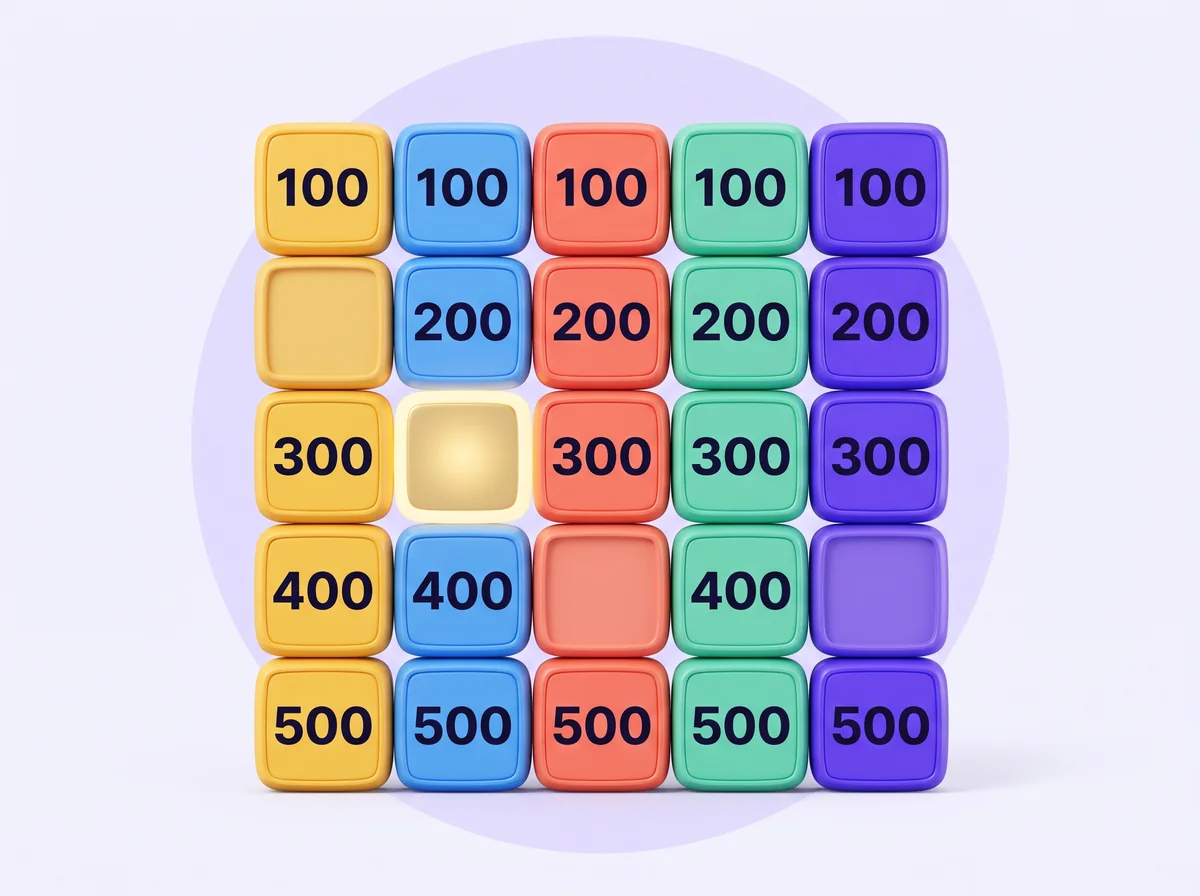 Табло5 теми по 5 въпроса, от 100 до 500 точки. Отборите избират поле, едно поле крие двойна стойност.Безплатно
 Отборен тест А/Б/В/ГВъпрос с четири отговора и таймер. Всеки отбор вдига карта с буква.Пусни на проектора
 НадбягванеВсеки отбор има писта. Верният отговор движи колата напред, трудният въпрос дава турбо.Пусни на проектора
 Теглене на въжеДва отбора един срещу друг. Всеки верен отговор дърпа въжето към твоя отбор.Пусни на проектора
 Морски шахХ срещу О на поле 3 на 3. За да заемеш квадрат, трябва да отговориш на въпроса в него.Пусни на проектора
 БомбаБомбата с неизвестен фитил минава от отбор на отбор при верен отговор. Не я задържай!Пусни на проектора
 КолелотоЗавъртете колелото: то избира темата и наградата. Понякога носи бонус, понякога взима хода.Пусни на проектора
Целият клас
Всички играят заедно или един по един пред класа. Ескейп стаяПет заключени врати и часовник. Всяка решена врата дава цифра от кода за изход.Пусни на проектора
 Милионер15 въпроса с нарастваща трудност, три жокера и сигурни суми.Пусни на проектора
 Горещ столЕдин ученик, 60 секунди и колкото може повече верни отговори. Класът следи класацията.Пусни на проектора
 БингоРазпечатайте картите. Учителят чете въпросите, учениците зачеркват отговорите.Пусни на проектора
 Вярно или невярноБързи твърдения. Класът гласува с палец нагоре или надолу.Безплатно
Думи и понятия
Ключовите понятия от темата: познай, свържи, запомни. КръстословицаКръстословица от 10 ключови понятия. Решавате на екрана или я разпечатвате.Пусни на проектора
 БесеницаПознайте понятието буква по буква, преди да свършат опитите.Пусни на проектора
 Тайният обектТри подсказки от трудна към лесна. Колкото по-рано познаеш, толкова повече точки.Пусни на проектора
 МемориОбърнати карти с въпроси и отговори. Намерете двойките и запомнете къде са.Пусни на проектора
 Свържи двойкитеШест въпроса и шест отговора, разбъркани. Отборите ги свързват на ред.Пусни на проектора
Мислене
Подреждане и откриване на грешки: разбиране, не наизуст.

Уроци в темата
Кратко обяснение, най-важното за запомняне и въпроси за всеки урок от учебната програма.
Въпроси и отговори: Глобалният свят
Всички въпроси от комплекта по английски език за 12 клас. Натиснете въпроса, за да видите верния отговор и обяснението. Удобно за преговор преди контролно и за подготовка у дома.
Globalisation
The process by which countries become more connected through trade, travel and communication is ___.
- globalisation
- isolation
- urbanisation
- nationalisation
Отговор: globalisation
Globalisation означава засилване на връзките между страните в икономиката, културата и комуникацията.
The world seen as one community connected by modern communication is often called a 'global ___'.
- town
- house
- street
- village
Отговор: village
Изразът global village описва света, свързан от медиите и интернет.
Goods that a country sells to other countries are called ___.
- imports
- loans
- taxes
- exports
Отговор: exports
Exports е износът, imports е вносът.
A company that operates in many countries is a ___ company.
- domestic
- multinational
- local
- family-run
Отговор: multinational
Multinational company има клонове или фабрики в много държави.
When the same shops and brands appear in cities all over the world, the cities become more ___.
- similar
- isolated
- ancient
- rural
Отговор: similar
Еднаквите вериги магазини правят градовете по света по-сходни.
Buying and selling goods between countries is international ___.
- travel
- trade
- tourism
- transport
Отговор: trade
International trade е международната търговия.
Goods that a country buys from other countries are called ___.
- exports
- outputs
- transfers
- imports
Отговор: imports
Imports е внос; exports е износ.
Which organisation deals with the rules of trade between nations?
- the World Health Organization
- the World Trade Organization
- UNESCO
- Interpol
Отговор: the World Trade Organization
Световната търговска организация (WTO) урежда правилата на международната търговия.
A product made in one country but sold all over the world is a ___ brand.
- local
- family
- global
- private
Отговор: global
Global brand е марка, позната по целия свят.
Which of these is often given as a disadvantage of globalisation?
- Cheaper products for consumers
- Faster exchange of ideas
- Local cultures and small businesses may lose out
- More opportunities to travel
Отговор: Local cultures and small businesses may lose out
Критиците смятат, че глобализацията заплашва местните традиции и малкия бизнес.
Products labelled 'fair trade' aim to ___.
- give producers in poorer countries a fair price
- make goods as cheap as possible
- stop all international trade
- sell only local products
Отговор: give producers in poorer countries a fair price
Fair trade гарантира справедливо заплащане на производителите.
An extra tax that a government puts on imported goods is a ___.
- tariff
- salary
- refund
- discount
Отговор: tariff
Tariff е мито върху внасяни стоки.
What does 'outsourcing' mean?
- Buying goods only from local shops
- Closing a factory for ever
- Paying an outside company, often abroad, to do part of the work
- Selling shares on the stock market
Отговор: Paying an outside company, often abroad, to do part of the work
Outsourcing е възлагане на дейност на външна фирма, често в друга страна.
The distance food travels from where it is produced to where it is eaten is called food ___.
- steps
- routes
- miles
- chains
Отговор: miles
Food miles показва колко път изминава храната; повече километри означават повече емисии.
When workers move production to countries with lower wages, the jobs are moved ___.
- indoors
- offshore
- online
- upstairs
Отговор: offshore
Offshoring: преместване на производство в чужбина, често с по-евтин труд.
Inversion and emphasis
Never ___ such a beautiful sunset.
- I have seen
- have I seen
- I saw
- seen I have
Отговор: have I seen
След отрицателно наречие в началото на изречението има инверсия: спомагателен глагол + подлог.
Rarely ___ late for school.
- she is
- is she
- she was
- does she is
Отговор: is she
Rarely в началото изисква инверсия: is she.
Seldom ___ such a good film.
- have I seen
- I have seen
- I saw
- seen I have
Отговор: have I seen
След отрицателни наречия като seldom се прави инверсия.
Not only ___ late, but he also forgot his books.
- he was
- he is
- did he was
- was he
Отговор: was he
Not only в началото изисква инверсия: was he.
No sooner had we left ___ it began to rain.
- when
- then
- that
- than
Отговор: than
No sooner ... than: щом ..., и.
Little ___ that he was being watched.
- he knew
- knew he
- did he know
- he did know
Отговор: did he know
Little в началото изисква инверсия с did.
Hardly ___ arrived when the phone rang.
- had we
- we had
- did we
- we did
Отговор: had we
Hardly ... when с инверсия и Past Perfect: Hardly had we arrived when...
Under no circumstances ___ the exam room before the end.
- students may leave
- may students leave
- students leave
- may leave students
Отговор: may students leave
Under no circumstances в началото изисква инверсия: may students leave.
So tired ___ that she fell asleep at once.
- she was
- was she
- she is
- is she
Отговор: was she
So + прилагателно в началото налага инверсия.
What I need ___ a long holiday.
- is
- are
- be
- being
Отговор: is
В изречение с What ... (cleft sentence) глаголът е в единствено число: What I need is...
It was Maria ___ won the competition.
- which
- what
- whom
- who
Отговор: who
В cleft sentence за човек използваме who (или that): It was Maria who won.
Choose the correct inversion of 'If you should need help, call me.'
- Should need you help, call me.
- You should need help, call me.
- Need you help, call me.
- Should you need help, call me.
Отговор: Should you need help, call me.
Should you... е инверсия на условно изречение тип 1.
Only after the meeting ___ the truth.
- she learned
- she did learn
- learned she
- did she learn
Отговор: did she learn
Only after ... в началото изисква инверсия в главното изречение: did she learn.
Choose the correct inversion of: 'If I had known, I would have helped.'
- Did I know, I would have helped.
- Have I known, I would have helped.
- Had I known, I would have helped.
- Had I know, I would have helped.
Отговор: Had I known, I would have helped.
В условно изречение от трети тип If I had known става Had I known.
Not until I got home ___ that I had lost my keys.
- did I realise
- I realised
- realised I
- I did realise
Отговор: did I realise
При Not until... инверсията е в главното изречение.
Migration and mobility
A person who leaves their own country to live in another one is a/an ___.
- tourist
- commuter
- emigrant
- inhabitant
Отговор: emigrant
Emigrant е човек, който напуска родината си; от гледна точка на новата страна той е immigrant.
A person who travels every day from home to work in another town is a/an ___.
- commuter
- refugee
- migrant
- emigrant
Отговор: commuter
Commuter пътува ежедневно до работа и обратно.
A person who comes to live permanently in a new country is an ___.
- intern
- inmate
- immigrant
- inventor
Отговор: immigrant
Immigrant е човек, който се заселва в нова държава.
Someone who is forced to leave their country because of war or persecution is a/an ___.
- expat
- refugee
- commuter
- backpacker
Отговор: refugee
Refugee (бежанец) е принуден да напусне страната си.
A person who lives abroad for work, often temporarily, is informally called an ___.
- inmate
- outsider
- alien
- expat
Отговор: expat
Expat (expatriate) е човек, който живее и работи в чужбина.
The official document you need to travel to another country is a ___.
- ticket
- receipt
- menu
- passport
Отговор: passport
Passport е паспортът.
The movement of skilled and educated people away from their country is called ___.
- brainstorm
- job hunting
- culture shock
- brain drain
Отговор: brain drain
Brain drain (изтичане на мозъци): заминаване на висококвалифицирани хора в чужбина.
Money that migrants send home to their families is called ___.
- taxes
- pensions
- remittances
- scholarships
Отговор: remittances
Remittances са паричните преводи от емигранти към семействата им.
An official stamp or document that allows you to enter a country is a ___.
- vista
- visa
- vote
- voucher
Отговор: visa
Visa е виза за влизане или пребиваване.
The feeling of confusion when you start living in a very different culture is ___.
- jet lag
- stage fright
- culture shock
- peer pressure
Отговор: culture shock
Culture shock е объркването и стресът при среща с непозната култура.
Which is a 'push factor' that makes people leave their country?
- better salaries abroad
- unemployment
- good universities abroad
- a safe destination
Отговор: unemployment
Push factors изтласкват хората от родината (безработица, война); pull factors ги привличат другаде.
Which is a 'pull factor' that attracts people to a country?
- better job opportunities
- war
- natural disasters
- high crime
Отговор: better job opportunities
Pull factors са привличащи причини: работа, по-високи заплати.
EU citizens can live and work in any EU country. This right is called freedom of ___.
- movement
- speech
- the press
- religion
Отговор: movement
Свободното движение на хора е една от четирите свободи на единния пазар на ЕС.
Which sentence uses 'emigrate' correctly?
- They emigrated from Bulgaria to Canada.
- They emigrated in Canada from Bulgaria.
- They emigrated Bulgaria to Canada.
- They emigrated at Canada.
Отговор: They emigrated from Bulgaria to Canada.
Emigrate from (страната, която напускаш) to (новата страна).
When people move from villages to cities, this process is called ___.
- emigration
- globalisation
- urbanisation
- integration
Отговор: urbanisation
Urbanisation: нарастване на градското население.
EU and cooperation
How many member states has the EU had since 2020?
- 28
- 27
- 25
- 30
Отговор: 27
След излизането на Обединеното кралство през 2020 г. ЕС има 27 държави членки.
What is the common currency used in many EU countries?
- the euro
- the pound
- the dollar
- the franc
Отговор: the euro
Еврото е общата валута на еврозоната.
What colour is the background of the EU flag?
- red
- green
- blue
- yellow
Отговор: blue
Знамето на ЕС е синьо с 12 златни звезди.
In which year did Bulgaria join the European Union?
- 2004
- 2007
- 1995
- 2013
Отговор: 2007
България и Румъния стават членки на ЕС на 1 януари 2007 г.
The area in Europe without passport checks at internal borders is the ___ Area.
- Erasmus
- Maastricht
- Lisbon
- Schengen
Отговор: Schengen
Шенгенското пространство премахва граничния контрол между страните членки.
How many stars are there on the EU flag?
- 12
- 27
- 15
- 10
Отговор: 12
Звездите са 12 и символизират единство, а не броя на държавите.
Where are the main EU institutions, such as the European Commission, based?
- Geneva
- Vienna
- The Hague
- Brussels
Отговор: Brussels
Европейската комисия и Съветът на ЕС са в Брюксел.
Which treaty created the European Union in 1992?
- the Treaty of Rome
- the Treaty of Versailles
- the Maastricht Treaty
- the Treaty of Lisbon
Отговор: the Maastricht Treaty
Договорът от Маастрихт е подписан през 1992 г. и създава ЕС.
Which country left the EU in 2020?
- Iceland
- Norway
- Switzerland
- the United Kingdom
Отговор: the United Kingdom
Обединеното кралство напусна ЕС на 31 януари 2020 г. (Brexit).
What is the official motto of the EU?
- United in diversity
- Strength in unity
- Liberty, equality, fraternity
- One Europe, one voice
Отговор: United in diversity
Девизът на ЕС е United in diversity (Обединен в многообразието).
Which international organisation was founded in 1945 to maintain world peace?
- the European Union
- the United Nations
- NATO
- the Council of Europe
Отговор: the United Nations
ООН е основана през 1945 г.; НАТО и Съветът на Европа са от 1949 г.
Which day is celebrated as Europe Day in the EU?
- 1 January
- 9 May
- 24 May
- 3 March
Отговор: 9 May
9 май отбелязва Декларацията на Шуман от 1950 г.
Which EU programme helps students study for a period at a university in another country?
- Horizon Europe
- Schengen
- Erasmus+
- Copernicus
Отговор: Erasmus+
Erasmus+ финансира обучение и стажове в чужбина; Horizon Europe е за научни изследвания.
Which EU institution is directly elected by the citizens of the member states?
- the European Commission
- the European Central Bank
- the Court of Justice
- the European Parliament
Отговор: the European Parliament
Европейският парламент се избира пряко от гражданите на всеки пет години.
Which treaty, signed in 1957, created the European Economic Community?
- the Treaty of Nice
- the Treaty of Lisbon
- the Treaty of Rome
- the Treaty of Versailles
Отговор: the Treaty of Rome
Римският договор от 1957 г. създава ЕИО.
Argumentative essay
In an argumentative essay, the writer ___.
- gives no opinion at all
- only tells a personal story
- describes a place in detail
- supports one clear point of view
Отговор: supports one clear point of view
В аргументативното есе авторът защитава ясна теза с аргументи.
Which is the first part of an argumentative essay?
- the conclusion
- a body paragraph
- the introduction
- the bibliography
Отговор: the introduction
Есето започва с увод, в който се представя тезата.
The last paragraph of an essay is the ___.
- introduction
- conclusion
- title
- heading
Отговор: conclusion
Conclusion е заключението.
The sentence in the introduction that states the main argument is the ___ statement.
- topic
- thesis
- final
- opening
Отговор: thesis
Thesis statement е изречението с основната теза на есето.
Which phrase introduces an example?
- Nevertheless
- For instance
- In conclusion
- Whereas
Отговор: For instance
For instance означава например.
Each body paragraph should start with a clear ___ sentence.
- funny
- final
- question
- topic
Отговор: topic
Topic sentence въвежда основната идея на абзаца.
Which phrase introduces an opposing view that you will then argue against?
- Opponents argue that
- To sum up
- First of all
- For example
Отговор: Opponents argue that
Opponents argue that въвежда контрааргумент, който после се опровергава.
Showing why an opposing argument is wrong is called ___ it.
- refuting
- repeating
- ignoring
- copying
Отговор: refuting
Refute означава опровергавам.
Which phrase strengthens your argument?
- It is clear that
- I guess
- Maybe sort of
- Who knows
Отговор: It is clear that
It is clear that звучи уверено и официално.
Complete: 'Tourism brings money. ___, it can damage the environment.'
- As a result
- For instance
- On the other hand
- Similarly
Отговор: On the other hand
On the other hand въвежда противоположна страна на въпроса.
Which is the strongest evidence to support an argument?
- A rumour heard at school
- Statistics from a reliable report
- A personal guess
- A comment on an anonymous forum
Отговор: Statistics from a reliable report
Данните от надежден източник правят аргумента убедителен.
Complete: 'Some claim tourism harms nature. ___, it also funds national parks.'
- Similarly
- Likewise
- Nevertheless
- Therefore
Отговор: Nevertheless
Nevertheless въвежда контрааргумент.
Which sentence is the most appropriate ending for an argumentative essay?
- So yeah, that's what I think.
- Let me tell you a funny story about my trip.
- In conclusion, the benefits of international cooperation clearly outweigh the drawbacks.
- Firstly, globalisation has many sides.
Отговор: In conclusion, the benefits of international cooperation clearly outweigh the drawbacks.
Заключението обобщава и потвърждава тезата във формален стил.
Which sentence uses cautious (hedging) language typical of academic writing?
- It seems likely that remote work will become more common.
- Remote work will definitely replace all offices tomorrow.
- Everybody knows offices are dead.
- Remote work is 100% the future.
Отговор: It seems likely that remote work will become more common.
It seems likely that смекчава твърдението и звучи академично.
A question asked for effect, without expecting an answer, is a ___ question.
- reported
- yes/no
- tag
- rhetorical
Отговор: rhetorical
Риторичният въпрос привлича вниманието, без да чака отговор.
Финален въпрос
Rewrite with inversion: 'I had never seen such a crowded city.' → Never ...
Отговор: Never had I seen such a crowded city.
След Never в началото на изречението спомагателният глагол had застава пред подлога I.
Ключови понятия по темата
- Trade
- Buying and selling goods between people or countries
- Migrant
- A person who moves to another place to live or work
- Refugee
- A person forced to leave their country because of war
- Export
- To sell goods to another country
- Brussels
- The city where the European Commission is based
- Erasmus
- EU programme for studying abroad
- Border
- The line that separates two countries
- Inversion
- Changing the normal order of subject and verb
- Thesis
- The main argument stated in an essay
- Diversity
- Many different cultures or kinds living together
Често задавани въпроси
Как да проведа час по темата „Глобалният свят“ с игра?
Изберете игра от комплекта и я пуснете на проектора или интерактивната дъска. Табло е добро за преговор на целия раздел, Ескейп стая е подходяща преди контролно, а Вярно или невярно е бърза загрявка в началото на часа. Не е нужно нищо за инсталиране.
По учебната програма ли са въпросите за 12 клас?
Да. Въпросите следват учебната програма на МОН по английски език за 12 клас (втори гимназиален етап) и покриват: Globalisation, Inversion and emphasis, Migration and mobility, EU and cooperation, Argumentative essay.
Могат ли учениците да отговарят от телефоните си?
Да. С режим „На живо“ всеки ученик влиза с код от телефона си, отговаря на въпросите и вижда класацията в реално време.
Може ли детето да упражнява темата у дома?
Да. В раздел „У дома“ детето играе със същите въпроси, събира звезди и повтаря грешките си, а родителят вижда напредъка.